Stop Using OpenClaw Like Claude Code: The Moat Is in Single-Agent Depth
Disclaimer: This post is machine-translated from the original Chinese article: https://ai-coding.wiselychen.com/single-agent-vs-multi-agent-openclaw/
The original work is written in Chinese; the English version is translated by AI.
A lot of people have been debating this: Should OpenClaw go “multi-agent with role specialization” or “single-agent with deep personalization”?
Let me cut to it:
If your goal is to run tasks, multi-agent works great. If your goal is to live your life for you, single-agent is the only answer.
This isn’t religious war. These architectures serve different goals.
You Think You’re Building an Agent. You Might Just Be Building a Scheduler.
A lot of “multi-agent success stories” look impressive:
- 5 specialized roles (commander, strategist, engineer, content, reviewer)
- Each with an independent workspace
- Routing rules, @-triggers, scheduled tasks
Technically sound. I respect the engineering behind it.
But here’s the problem:
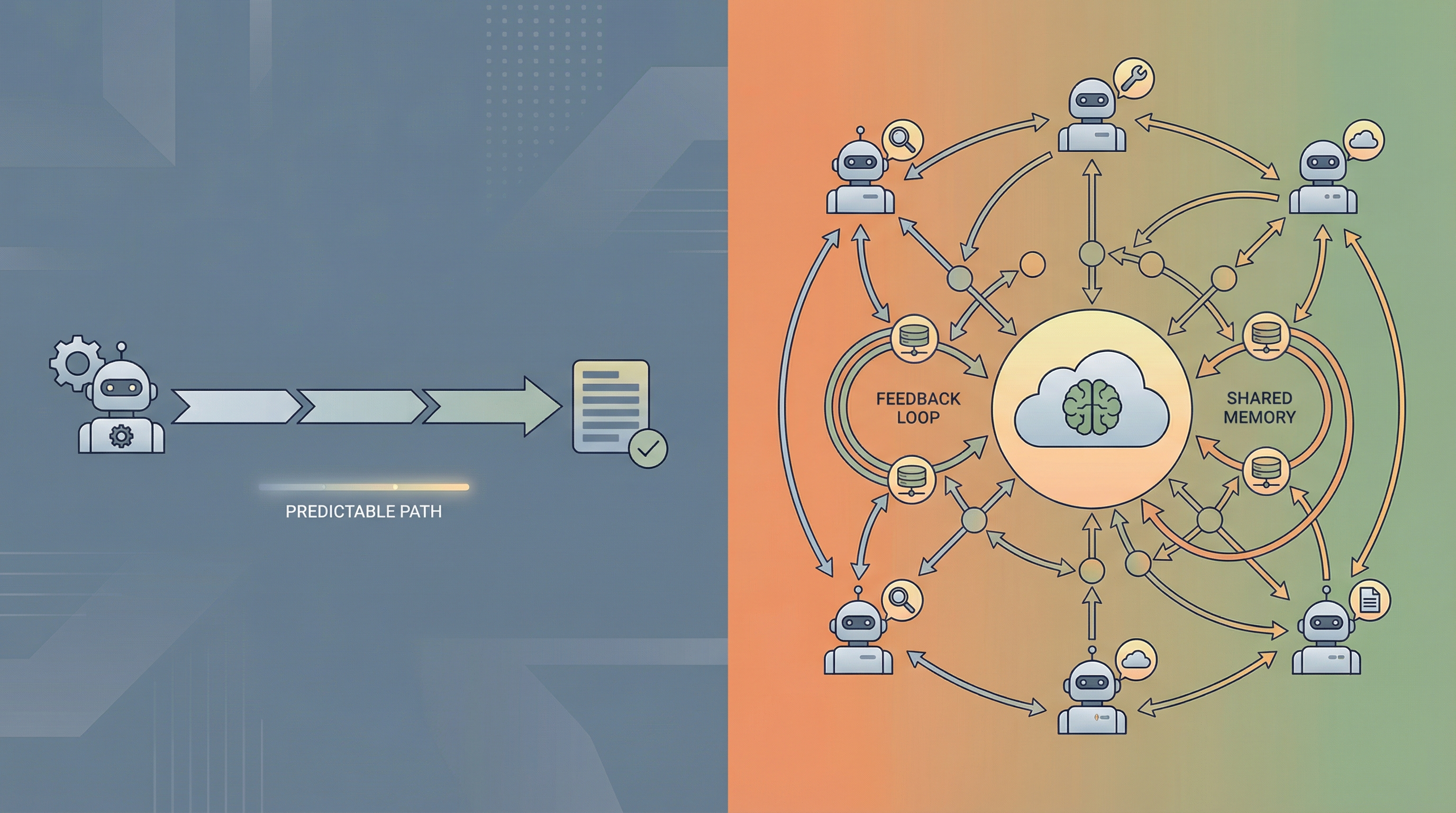
This system solves a throughput problem, not an “understanding you” problem.
You get great task distribution. You don’t necessarily get a partner who actually knows you.
The Real Cost of Multi-Agent Isn’t Tokens — It’s Memory Fragmentation
The most overlooked price of multi-agent: information compression loss at every handoff.
Agent A understands your tone. Agent B only gets a summary. B finishes and hands off to C. C interprets it again.
Every handoff drops context.
Sound familiar? It’s exactly what happens in large companies: The CEO’s original intent goes through three layers of translation, and the execution looks nothing like the original idea.
You built clean separation. You also built expensive amnesia.
OpenClaw’s Rarest Capability Is Shared Long-Term Memory
OpenClaw’s strongest feature isn’t how many agents you can spin up.
It’s that you can cultivate it into a continuously evolving work partner:
- Remembers your rhythm (when to remind you, when to stay quiet)
- Remembers your standards (do you want diplomatic, or honest?)
- Remembers your decision preferences (stability first? replaceability? speed?)
None of this can be encoded in a one-time prompt. It grows through sustained interaction, mistakes, corrections, and accumulated records.
My experience:
One complete memory is worth more than five precisely crafted prompts.
Multi-Agent vs. Single-Agent: How to Choose
| Scenario | Right Architecture | Reason |
|---|---|---|
| Batch translation, batch summarization, parallel data scanning | Multi-agent | Task is parallelizable; throughput-heavy |
| Long-term personal assistant, co-writing, decision support | Single-agent depth | Memory-heavy, consistency-critical |
| High-stakes workflows (approvals, external communication) | Single-agent + strict tool boundaries | Reduces handoff errors |
| One-off sprint project | Multi-agent (short-term) | Fast capacity burst |
It’s not about which is more advanced.
It’s about whether you want a “task machine” or “someone who can step in for you.”
Honestly: Single-Agent Depth Is Slower, But Harder to Replace
I’ll admit it: multi-agent usually produces more impressive short-term output.
But if your endgame is “building an AI moat for yourself or your team,” the thing that’s genuinely hard to replicate isn’t how many roles you have — it’s how deeply this agent understands you.
Put another way:
- Multi-agent is like an org chart
- Single-agent depth is like a second self
And your second self is where the leverage lives.
4 Actions You Can Take Right Now
- Define your goal first: Do you want throughput, or judgment quality?
- Lock in one primary agent: All high-value decisions route through the same context.
- Write down your mistakes: Every time something goes wrong, capture it immediately. Don’t rely on “remembering next time.”
- Use multi-agent only for parallel tasks: Treat it as an accelerator, not as the brain.
Conclusion
I’m not anti-multi-agent.
What I’m against is this: Building a system meant to “know you” — and ending up with a beautifully organized workflow where nobody actually knows you.
On the OpenClaw path, more isn’t the destination. Depth is.